
I remember my first session with a therapist many years ago. I went along with a brief summary of my life story and what I thought was wrong with me, and I asked “Do you think you can help me?” What I really wanted to know was if I could be fixed. I felt so deeply broken that I just didn't know if it might be possible.
Some time later, I voiced a realisation and some fears that went along with it: “I'm afraid that if I work through all this stuff, I won't know who I am. What if there isn't anybody underneath all this? Who am I, if I'm not all of these things that I think are wrong with me and my life history?”
I held a deep belief that, somehow, the negative things from my past and the parts of myself that I didn't like would somehow dissolve and cease to exist.
I remember that years later, a good friend said to me, “You do realise that this stuff doesn't actually go anywhere, right?” I was a bit puzzled. I didn't know what my friend meant and, seeing my confused expression, my friend explained a little further, “Our histories and experiences don't disappear. We don't get rid of them. We learn to live with them and we integrate them.”
I hadn't consciously realised until that moment that I held a deep belief that somehow, through therapy and personal development, the negative things from my past and the parts of myself that I didn't like that I felt resulted from them, would somehow dissolve and cease to exist. Of course, that seems completely illogical and irrational now! We can't change the past, after all.
Change begins in the present moment, because that's where we have a choice.
So what do we do with this stuff? As I've just said, we can't change what's happened in the past - and we have limited control over what will happen in the future. The only moment we really have is this one, right here and now. We are conditioned by the past but we are not just machines responding to input. That's the beauty of being human: the possibility of and capacity for change. That change begins in the present moment, because that's where we have a choice.
So I've just said that we're not simply machines that are responding to input, but sometimes we do live our lives like that. We live in a kind of autopilot, which can lead us to carry out habitual responses or reactions. In order to open up choice, we need to develop awareness of what's going on in order to create space to make decisions and choices, to allow creativity to emerge, rather than following habitual patterns and reactions.
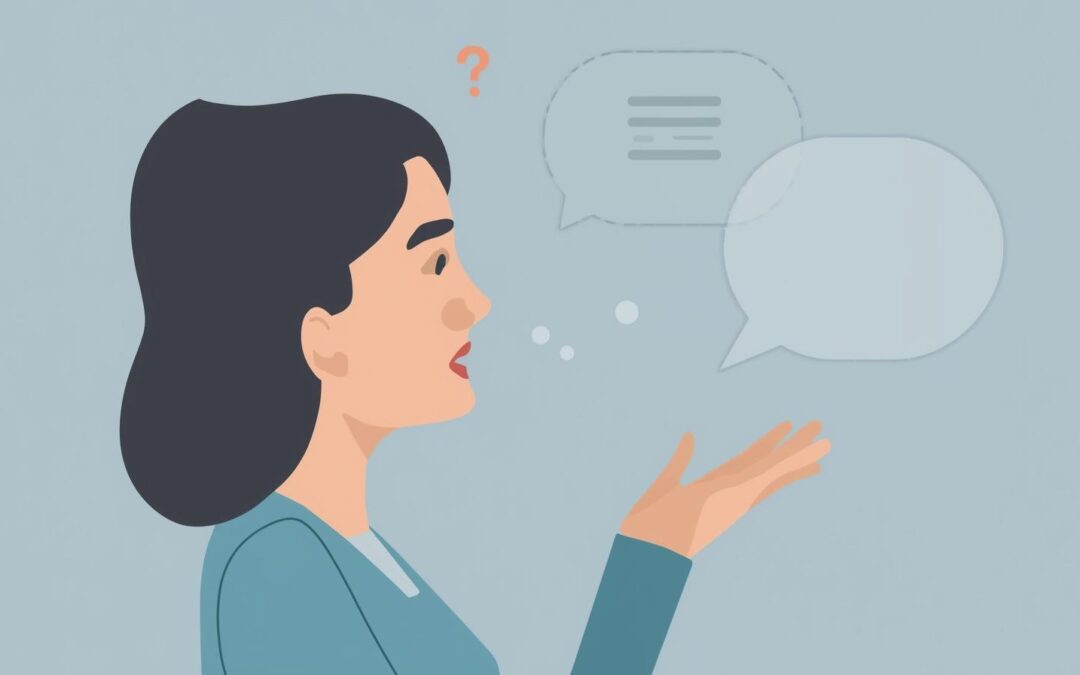
Talking about things to somebody who's really listening can help to become more aware of things that might have been hidden from conscious awareness.
This is one of the things that can happen in therapy. It's not the only thing that can help with this, and it's not the only thing that therapy can be helpful for. Some clients and students have asked me what the purpose is in “just talking about things”. I don't have a simple and straightforward answer to that, because therapy is very individual, as there are many things that one might talk about. However, talking about things to somebody who's really listening with curiosity and interest - and without judgement - can help to become more aware of things that might have been hidden from conscious awareness. It can help to notice patterns, thoughts, feelings, views or beliefs that might have been having an influence but wouldn't have been known about.
The relief of self-discovery and coming into a deeper relationship with oneself
When we become aware of these thoughts, patterns, feelings, beliefs, etc, we can start to notice them and the effects they have on us. In other words, we go from reacting to things that we are not aware of to choosing how we respond to things that we are aware of. Sometimes, this can be a painful process. However, in my experience, it can feel liberating on several levels. For example, the relief of sharing something that perhaps was hidden out of awareness because of a sense of shame, the relief of self-discovery and coming into a deeper relationship with oneself, and the relief of not having to follow the same patterns that can lead to stuckness but rather making creative choices (even if these might be outside of the comfort zone and therefore feel a bit scary at first).
So, whilst we can't change the past, we can work with what's going on in the present moment, which has been conditioned by our previous. “Just talking about stuff” in the context of a safe therapeutic relationship can help us to develop awareness of some of the patterns contributed to by those past conditions, and it can also help to share and discover parts of ourselves that feel they may have been some uncertainty around, some shame, fear of rejection, or lack of acceptance. In other words, we can come into a deeper relationship with ourselves through in sharing and being witnessed by another.
✉️ Interested in a free 15-minute chat? Click here to send me a message on a WhatsApp
Love this, also I wasn’t sure stuckness was a word so everyday is a school day 🙏🏻
Thanks, Matt. It’s great to be open to learning (even though I’m not sure the word is in the dictionary 🤭)!
È vero… Il passato non si cancella … Anche perché quello che siamo adesso è il risultato delle nostre esperienze. Positive e negative. Mi piace molto quello che hai scritto.
Grazie, Alessandro.🙏🏼 Anche c’è la possibilità di fare una decisione in ogni momento. 😊