
Trauma-informed therapy is a way of working that puts your safety and wellbeing first. Maybe you've never had therapy, feel a bit anxious or worried about what to expect, or worry therapists might move too fast. This approach helps you stay in control. The first step is to help your nervous system learn to feel safe and calm before exploring things deeper. We work together on how past experiences impact your life now.
The first step is to focus on helping your nervous system to learn how to feel safe and calm before exploring things deeper. In the first stage of trauma therapy, we focus on stabilisation and safety - read more about that here.
What is wrong with you?"
Quite often, therapy can focus on trying to work on behaviour, change or improve symptoms, which can be associated with the question, “What is wrong with you?”.
Experiencing trauma often leads to a sense of shame, a feeling that, somehow, there is something wrong with you.
"What happened to you?"
Trauma-informed therapy asks ‘what happened to you?’ rather than seeing people as flawed and needing fixing. It acknowledges issues are often normal responses to past experience.
These responses have often helped someone to survive, but they may get in the way of living life now.
Trauma can impact wellbeing, coping, and relationships
Trauma can impact a person's wellbeing, for example, experiencing low mood, anxiety, and overwhelming emotions. It can also impact relationships, such as having difficulty trusting other people. It can also affect how someone copes in life, for example using strategies like avoidance, withdrawal, or even substance use
Exploring the impact of trauma
Trauma-informed therapy helps to explore these impacts and develop awareness of how they show up in your life physically, mentally, emotionally, behaviourally, and in relationships.
The importance of trust and safety
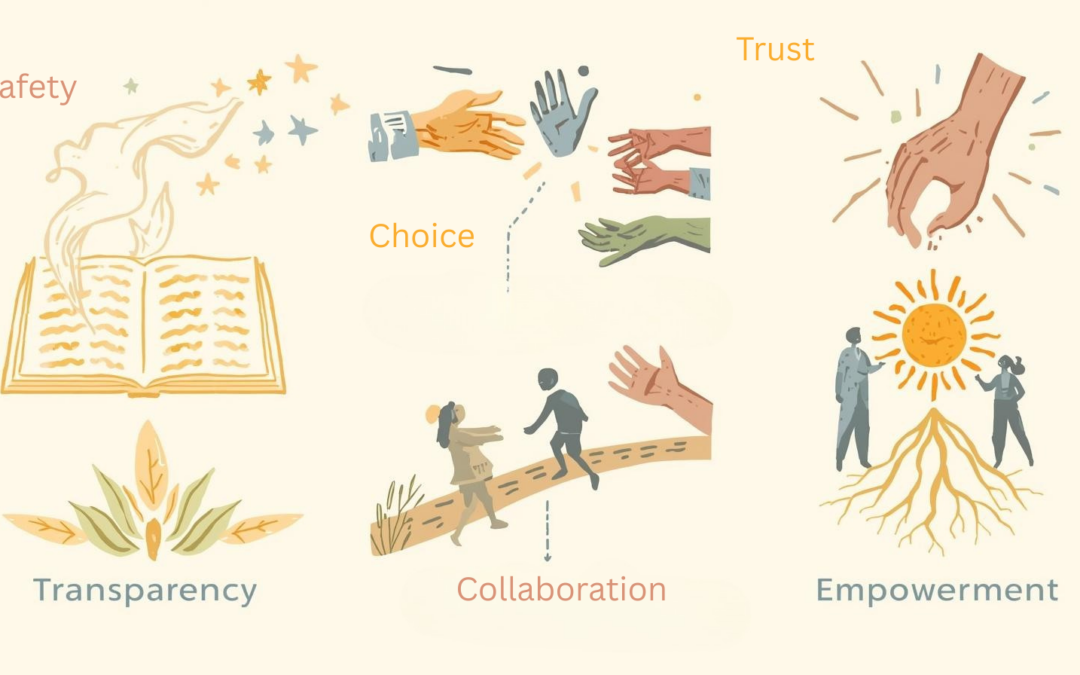
Trauma-informed therapy prioritises trust and safety in every aspect.This can look like: -
- Transparency - As your therapist, I prioritise trust and safety in every aspect. I'll explain my approach and any changes, so you know what to expect.
- Choice - offering and clearly communicating choices about how we work together in therapy
- Collaboration - working alongside one another and allowing healing to take place within the relationship by sharing power and decision-making
- Empowerment - acknowledging and supporting your resilience and ability to heal yourself
Trauma-informed therapy doesn't mean talking about traumatic experiences.
Sometimes, this can be re-traumatising, and it's not necessary to revisit events in order to process and heal from them and to work on the impacts that it is having on your life now.
Sometimes, for some people, it can be helpful and many clients have said that they have felt as though a weight has been lifted once they shared their experiences.
Letting go of shame
Part of the reason for this is that we can hold a lot of shame around things that happened to us that weren't our fault and through sharing at the right time and under the right conditions, we can realise that we have nothing to be ashamed of.
This is a very personal and individual process that can take time, though, and this is something to discuss in therapy.
Preparing to explore trauma
Trauma informed therapy often also involves preparing to explore traumatic experiences through learning how to self-regulate and ground oneself and, importantly, developing a warm, trusting relationship within which it feels safe to share.
If you have any questions, feel free to get in touch!
Trackbacks/Pingbacks