
by Dr Rebecca Morgan
Most of us grow up thinking perimenopause is something that happens much later in life. In reality, it can start earlier than you might expect, often in the 30s. The combination of perimenopause and ADHD can be especially challenging.
The things you’ve relied on for years to keep life ticking along can suddenly feel shaky or unreliable.
Understanding how ADHD and perimenopause interact can make this stage feel far less confusing and a lot less personal.
Oestrogen, dopamine, and why your brain feels different with perimenopause and ADHD
Research suggests that people with ADHD often experience perimenopause earlier, and with more intense symptoms, than those without ADHD.
Perimenopause is a time of hormonal fluctuation, especially in oestrogen. Oestrogen affects dopamine and noradrenaline, which play an important role in ADHD symptoms.
When oestrogen dips, so do dopamine and noradrenaline, and ADHD symptoms can become more noticeable.
Research suggests that people with ADHD often experience perimenopause earlier, and with more intense symptoms, than those without ADHD. This is not something you’ve done wrong. It’s simply how the body works.
If you want to understand more about how hormonal shifts affect ADHD throughout the cycle, I’ve shared a short video about ADHD and PMS here.
It can also be helpful to see the bigger picture visually. The graph below shows how oestrogen and progesterone naturally rise and fall across the female lifespan, and it highlights just how dramatic these changes can be during perimenopause.
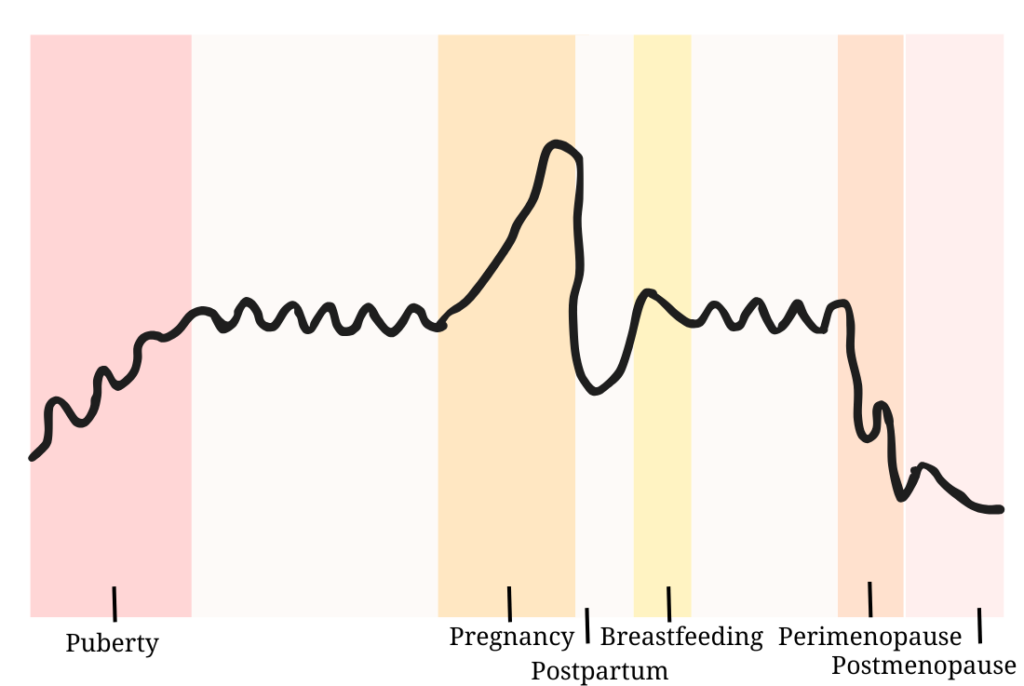
Image: Female sex hormones across the lifespan (Adapted from Osianlis et al, 2025). Line represents levels of oestrogen and progesterone.
Seeing the hormonal landscape laid out like this can make it easier to understand why certain stages of life feel more intense or harder to manage, especially if you’re also navigating ADHD.
When Your Usual Coping Strategies Start to Fall Apart
Maybe you’ve learned to work with your brain rather than against it, so that you can function in life.
If you have ADHD, you’ve probably built up a whole toolkit of ways to get through the day. Maybe you rely on reminders, routines, humour, or bursts of energy to get things done. Maybe you’ve learned to work with your brain rather than against it, so that you can function in life.
Then perimenopause begins and the coping mechanisms stop working as you start to notice things such as: -
- You walk into a room and have absolutely no idea why you’re there
- You reread the same sentence over and over and still can’t take it in
- You cry because you dropped something on the floor
- Your motivation has disappeared
- Basic words evaporate from your mind
- You forget a birthday even though you set reminders
- You snap at someone and feel awful straight away
- You can’t hold onto a thought (so maybe you blurt it out before it disappears and then feel embarrassed)
It can feel like things that were once manageable now take more effort. And for some people, this is the point where they start wondering if something deeper is going on.
Many people who have ADHD but were never diagnosed earlier only begin to recognise the signs when hormonal changes make their usual coping strategies less effective.
This is often when people go to their GP to try to make sense of what is happening. Not every practitioner is familiar with how ADHD and hormonal fluctuations interact, so having a bit of understanding about the connection can help you feel more prepared and able to advocate for yourself.
Common Overlapping Perimenopause and ADHD Symptoms
Cognitive symptoms
- memory lapses
- losing or forgetting words mid sentence
- difficulty holding a thought
- trouble focusing
- reduced motivation
- challenges with planning and organisation
- brain fog
Emotional symptoms
- anxiety
- low mood
- irritability
- feeling overwhelmed
- tearfulness
- shame
- rage
- impatience
- emotional reactivity
Not everyone gets the classic hot flashes or night sweats. When physical symptoms are subtle or absent, perimenopause can easily be missed, especially in your thirties.
Sleep problems are common in both ADHD and perimenopause. When they combine, insomnia can ramp up and make everything else feel ten times harder.
Feeling like you're falling apart?
When things change suddenly, it’s easy to think:
- My medication has stopped working
- I’m becoming unreliable
- I’m too emotional
- I can’t cope like I used to
- What is wrong with me??
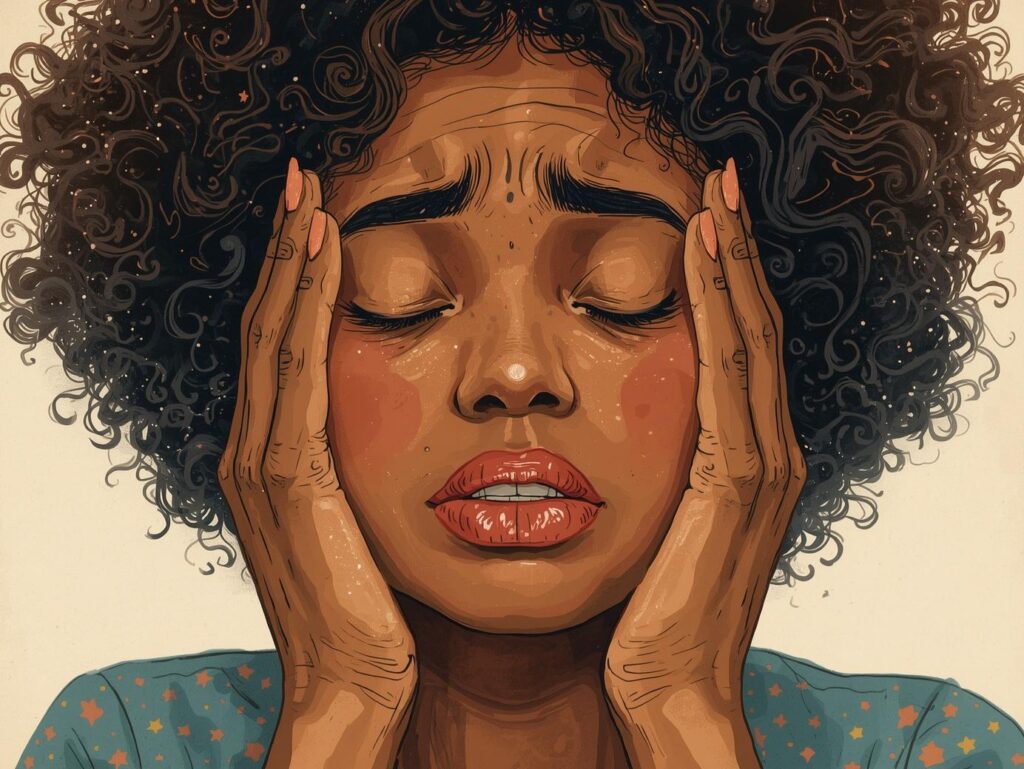
These thoughts are understandable, but they’re not the full story. What you’re experiencing is a normal response to fluctuating hormones. It’s not a sign that you’re failing or falling apart.
Understanding what’s happening can take away a lot of the shame and self blame.
How Therapy Can Support You Through This Stage
Therapy can help you to:
- understand what’s going on internally
- develop more self acceptance
- build self awareness around your patterns and triggers
- practise self compassion
- find practical strategies that actually work for you right now
What You Can Do Next
Here are some things that you might find supportive during this stage:
- Jot symptoms down when you remember to help spot patterns, whether it’s in a note or a voice memo to yourself. (Even small notes can build a useful picture over time.)
- Bring notes to GP appointments - you could make notes on your phone when they pop into your mind
- Teach out for support if things feel too much
- Learn about the ADHD and hormone connection so you can understand what’s physiological rather than personal
- Talk to your GP about HRT
- If you take ADHD medication, discuss your dosage with your provider
Everyone’s experience of perimenopause is different. Some people have mild symptoms. Others have more intense ones. There is no right or wrong way to manage it.
Conclusion: You Are Not Imagining It and You Are Not Alone
If you’re noticing changes in your mood, focus, or ability to cope in your thirties or forties, you’re not imagining it. The overlap between ADHD and perimenopause is real, and understanding it can bring a huge sense of relief.
With the right support and a bit of compassion for yourself, this stage can become more manageable and far less confusing.
If you'd like support, feel free to get in touch!
✉️ Request a free 15-minute chat via WhatsApp
Suggested resources:
Osianlis, E., Thomas, E. H., Jenkins, L. M., & Gurvich, C. (2025). ADHD and sex hormones in females: A systematic review. Journal of Attention Disorders, 29(9), 706-723.
So,I like it